

In the early 1990s, Simon Bisley caught everyone’s attention—especially that of Kevin Eastman, co-creator of the Teenage Mutant Ninja Turtles and new owner of Heavy Metal magazine. Eastman met Bisley at a festival in London while launching his publishing house, Tundra. A big fan of British comics, Eastman immediately offered him a collaboration: “I want you to do covers and short stories for Heavy Metal, and we’ll develop the Melting Pot project.”
Heavy Metal, the Cult Adult & Underground Magazine
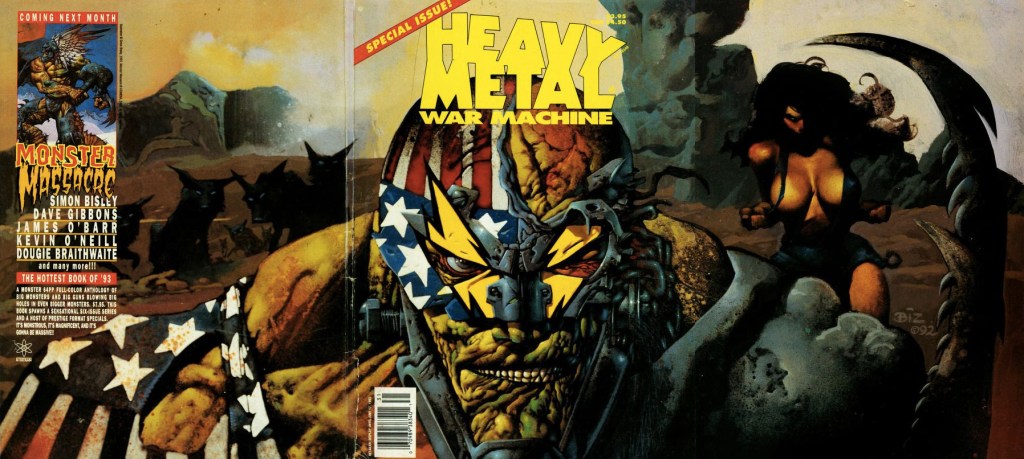
Launched in the U.S. in 1977 as the American version of the French magazine Métal Hurlant, Heavy Metal quickly established itself as a UFO in the comic book world. Nothing like the polished superheroes of Marvel or DC: here, it was all about wild science fiction, dark fantasy, raw eroticism, and experimental storytelling. The tone was unabashedly adult, unfiltered and uncensored, making it a haven for creators from around the world.
Its pages featured big names like Moebius, Enki Bilal, Richard Corben, Liberatore… artists who shaped the magazine’s DNA: a blend of pulp, rock, sex, and visual psychedelia. Each issue was a deep dive into graphic underground, where the bizarre and transgressive were the norm.
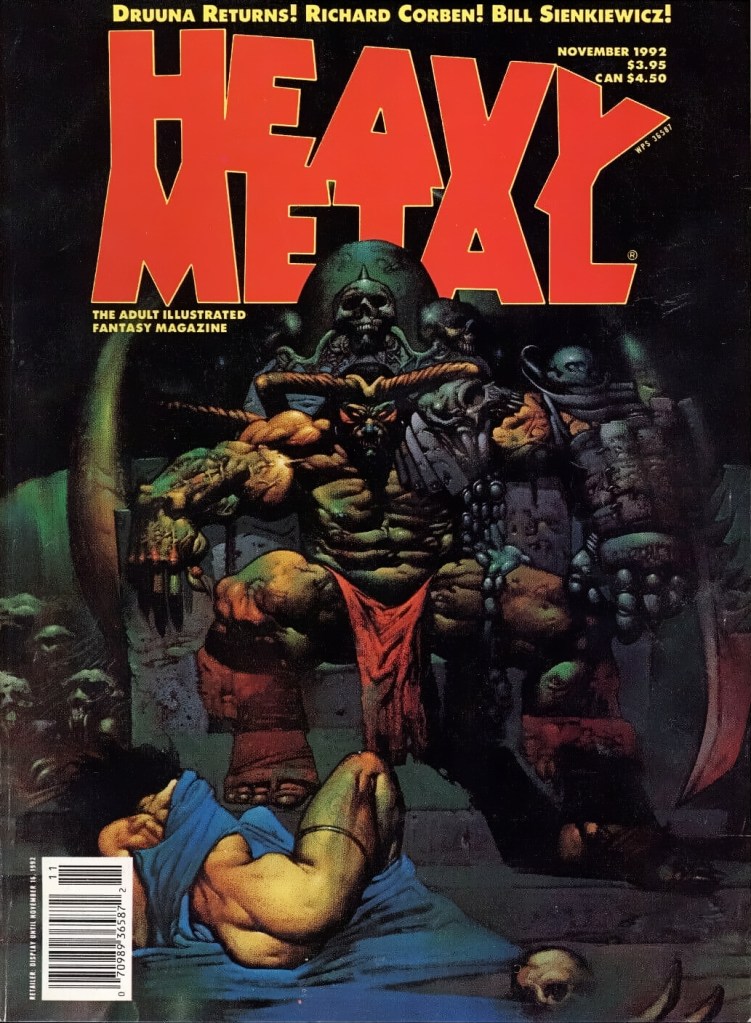
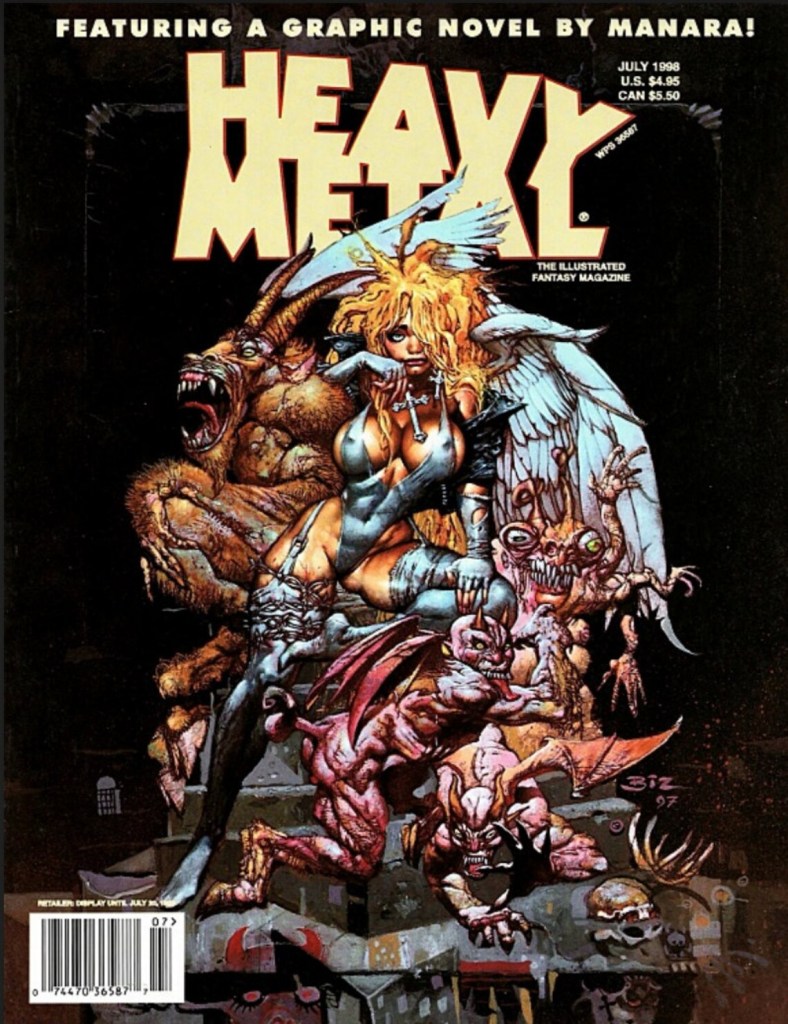
Heavy Metal served as a playground for giants like Sienkiewicz and Corben, and it was in this artistic melting pot that Biz found his natural place, fueled by the same creative porosity that defined the magazine.
One can easily imagine the backstage banter: Biz asking Corben — “Dude, got any green left?” — before glancing at Den and laughing: “Wow… but why is your character never wearing underwear?!”
Melting Pot: Light the Fuse
Melting Pot was Eastman’s “baby,” co-written with Eric Talbot, and they invited Bisley to illustrate it entirely. Bisley agreed and tried to bring his unique painted style to the project, even though part of it had already been drawn. Eastman would later admit he had “wasted [Bisley’s] talent on a project that deserved more development,” but Melting Pot laid the foundation for a fruitful friendship between the two men. There would be much more to say, especially about Fakk², but in this article, the focus is on Bisley’s covers for the magazine.
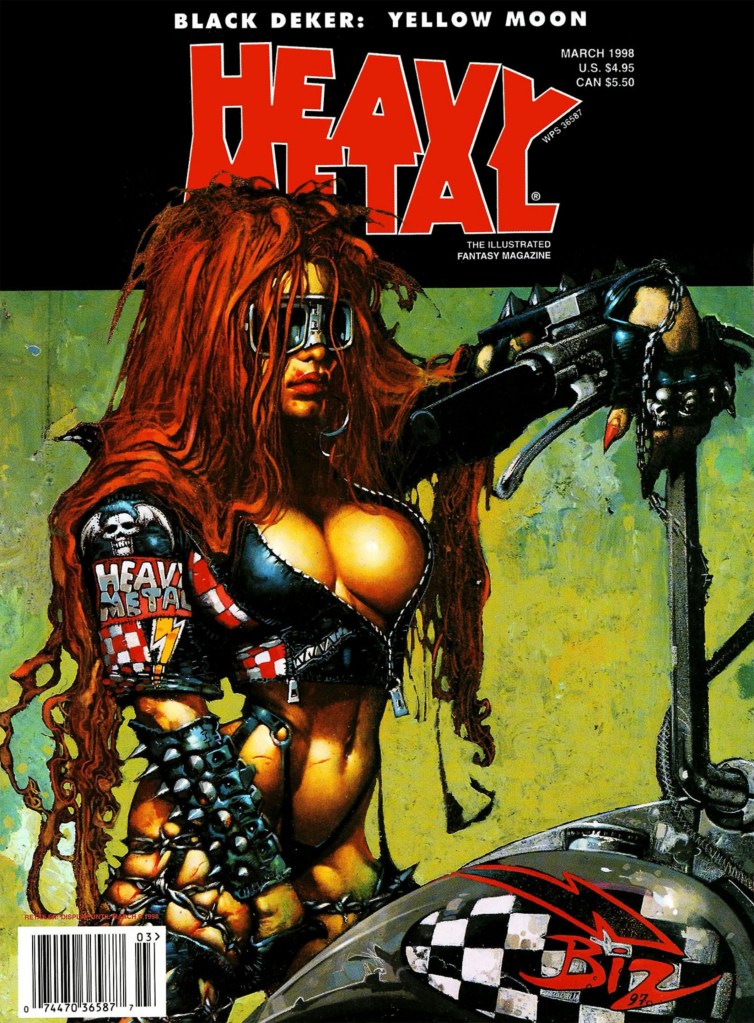
Bigger Than Life Covers
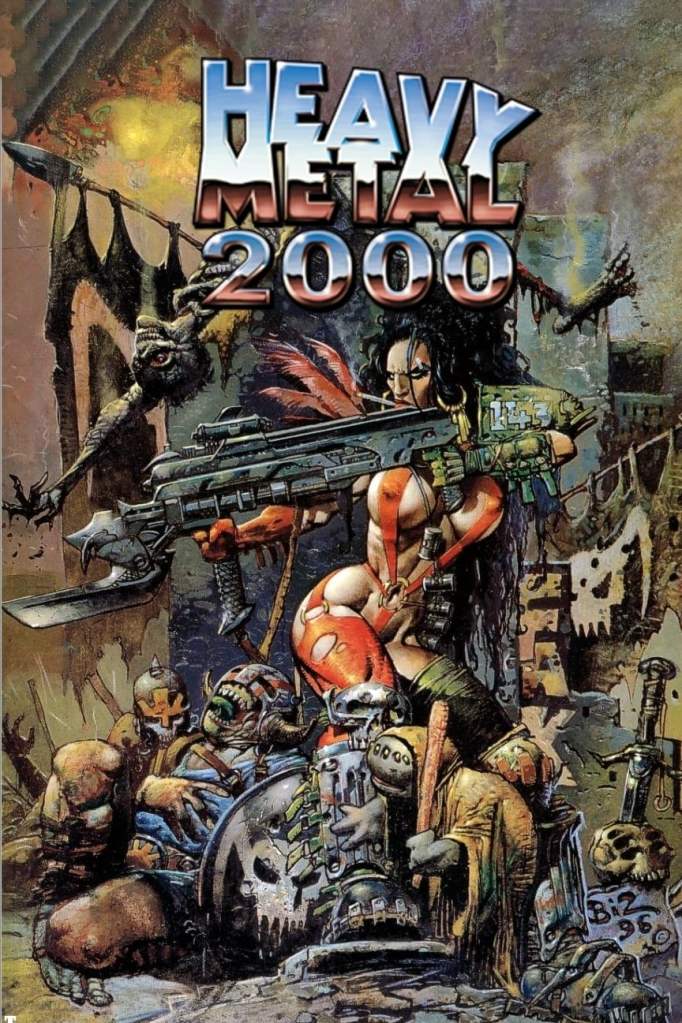
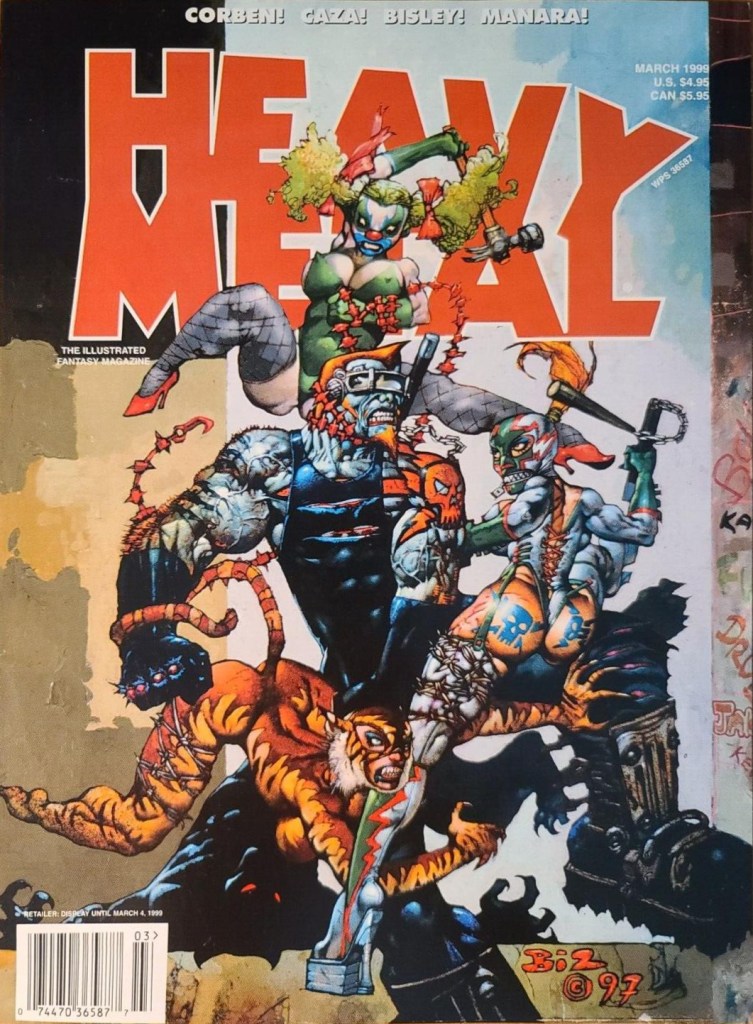
When Biz lands on a Heavy Metal cover, you know it instantly: metal, leather, sweat, bigger-than-life anatomies, and biting lighting. This baroque, brutal, and sexy blend made him one of the magazine’s recurring visual signatures. Browsing his covers feels like witnessing the evolution of an artist through multiple lives.
In the ‘90s, his images burst with raw energy: chaotic entanglements of warriors, hypertrophied muscles, and shards of metal, with everything seeming ready to explode off the page. It’s the barbaric Biz, still steeped in his triumphs with Slaine and Lobo.

Evolutions of a Style
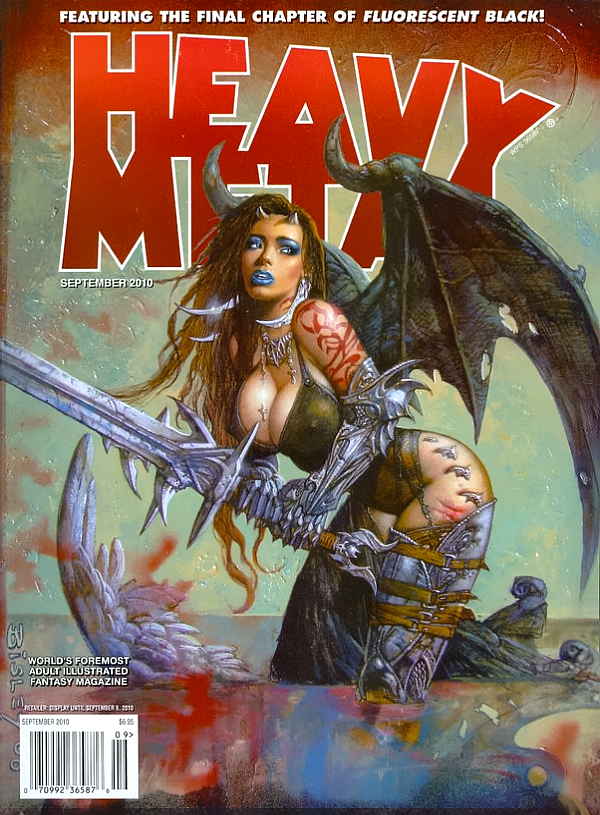
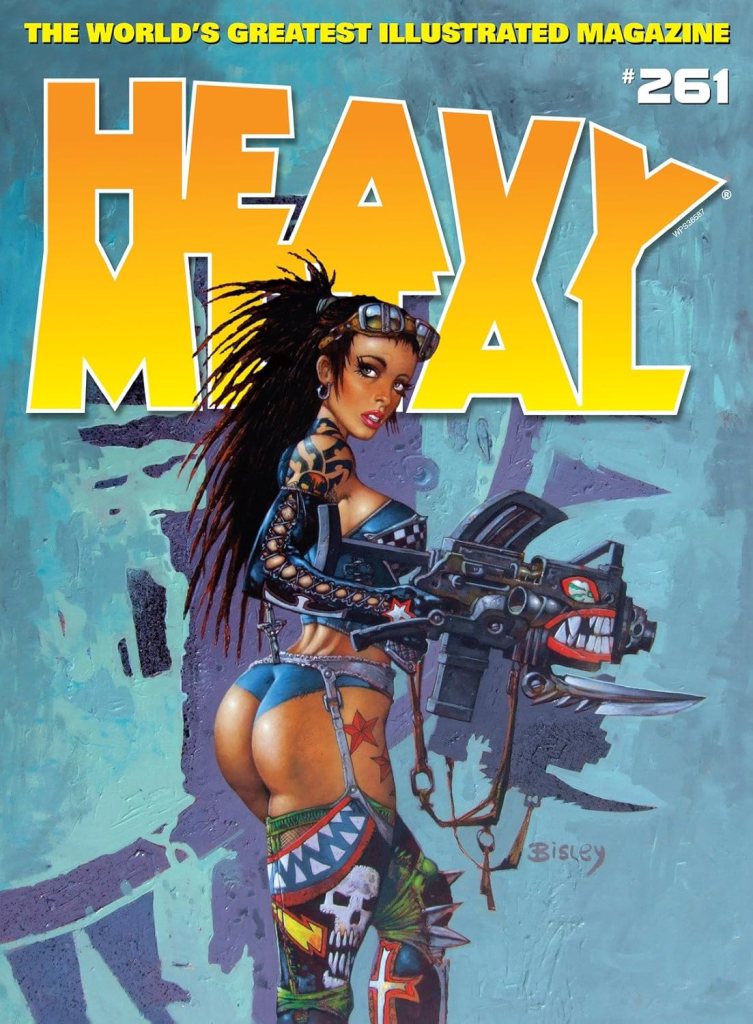
In the following decade, his line took on a more “biker calendar” style: a winged demoness, armed and nearly naked, posed like a garage pin-up against a stormy gothic background — a clear nod to the American pulp imagery so dear to Eastman. But Biz never boxed himself into one aesthetic. In the next issue, he might shift to a tattooed cyberpunk heroine, perched on improbable heels, armed to the teeth and framed like a futuristic poster.
Here, the pin-up vibe merges with an almost cartoonish sense of exaggeration, proudly embracing overload and provocation. Two very different covers — yet instantly recognizable as Bisley: the same intense gaze, the same baroque energy, the same ability to turn each figure into a “bigger than life” icon.
In his more recent covers, Biz deploys apocalyptic grandeur, like in the one for Four Horsemen of the Apocalypse: a biblical fresco, imagined as a heavy metal poster, with flames later added via Photoshop — a questionable touch, since the original was powerful enough on its own. This cover is a reminder that Four Horsemen wasn’t just a visual piece: it was also a full comic book project entirely drawn by Bisley — a total immersion into his universe, and an absolute must-read.
And it’s within this trajectory that we must place the Taarna cover for the 45th anniversary: wild and free, riding her flying beast, more pop, almost cartoonish in its exaggeration, but always marked by that “bigger than life” energy that defines Simon Bisley’s style. A cover that feels like the ultimate synthesis of all Biz brought to the magazine — power, irony, pin-up appeal, and a taste for reinvented mythology.


All artworks and materials are
© Heavy Metal Magazine and © Simon Bisley.
 Simon Bisley Fanboys