
Created in 1963 by Arnold Drake, Bob Haney, and Bruno Premiani, Doom Patrol has always stood apart in the DC universe. With its broken heroes and bizarre storytelling, it has often been seen as the outsider of mainstream comics, flirting with the experimental and the avant-garde. Over the decades, multiple incarnations have redefined the team, each bringing its own unique vision to these misfit heroes.
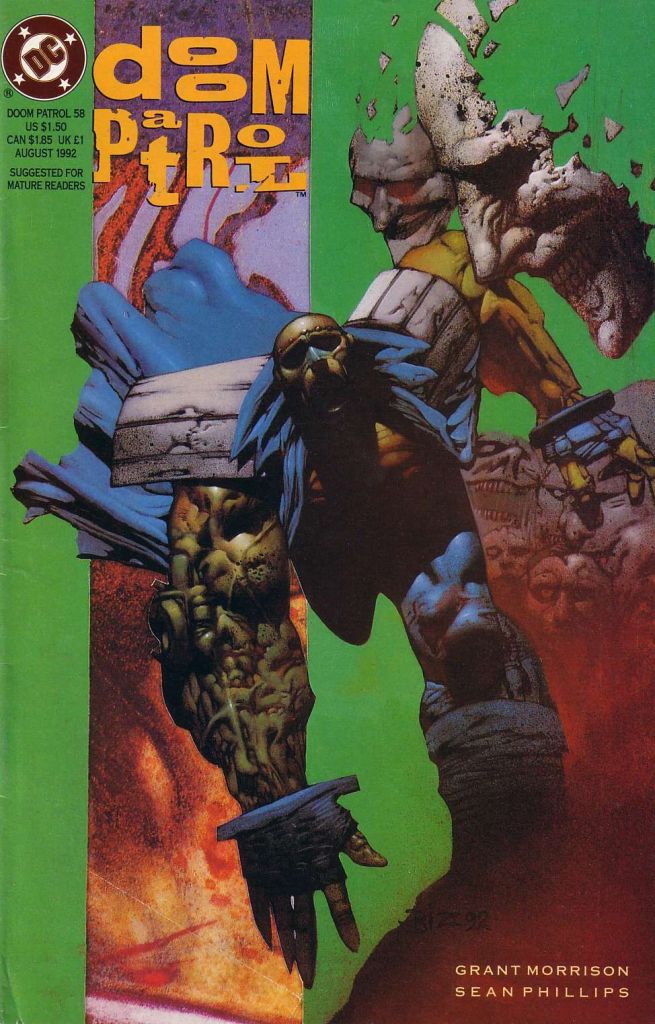
The man behind the legendary illustrations of Lobo and Slaine was about to leave his unmistakable mark on the series with a series of mind-blowing covers—blending painting, collage, and raw textures. Buckle up: we’re diving into the twisted world of Doom Patrol through the wild genius of Simon Bisley.
Grant Morrison’s Doom Patrol: A Surreal Transformation
When Grant Morrison took over Doom Patrol with issue #19 of the second volume, he transformed it into a surreal experience like no other. Gone was the simple team of unconventional superheroes—Morrison plunged headfirst into themes of madness, gender identity, and sexuality, weaving them into abstract narratives populated by outcasts and oddities. Critically acclaimed, this run was so groundbreaking that it helped pave the way for Doom Patrol‘s transition to Vertigo, DC’s imprint dedicated to mature storytelling.
But a comic book isn’t just about its story. The first thing that grabs a reader’s attention, that intrigues or even shocks them, is the cover. And who better than Simon Bisley to ignite the imagination at first glance?
Bisley’s Visual Approach to Doom Patrol
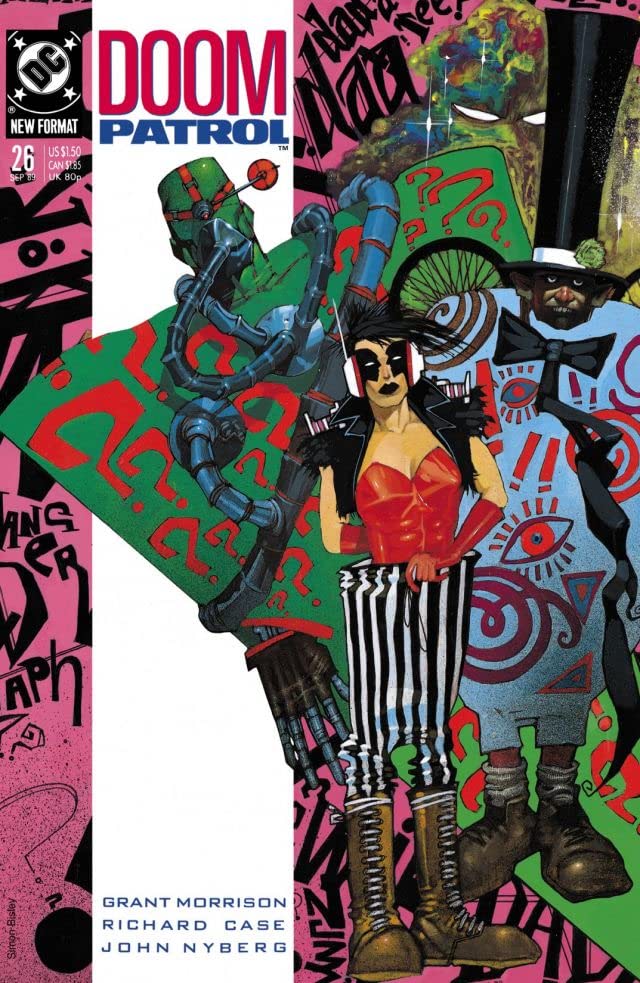
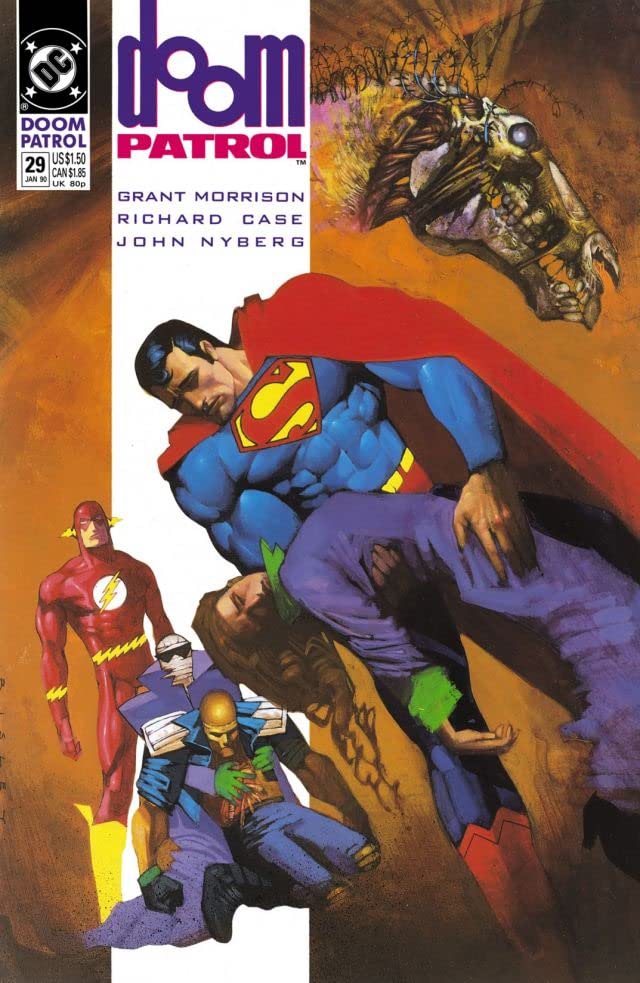
From his very first covers for the series, Bisley imposed his unmistakable signature. A visual explosion where brutal inking, saturated colors, collage, and gritty textures clashed in perfect chaos. His style, both anarchic and masterful, became the ideal reflection of the inner turmoil of Morrison’s characters.
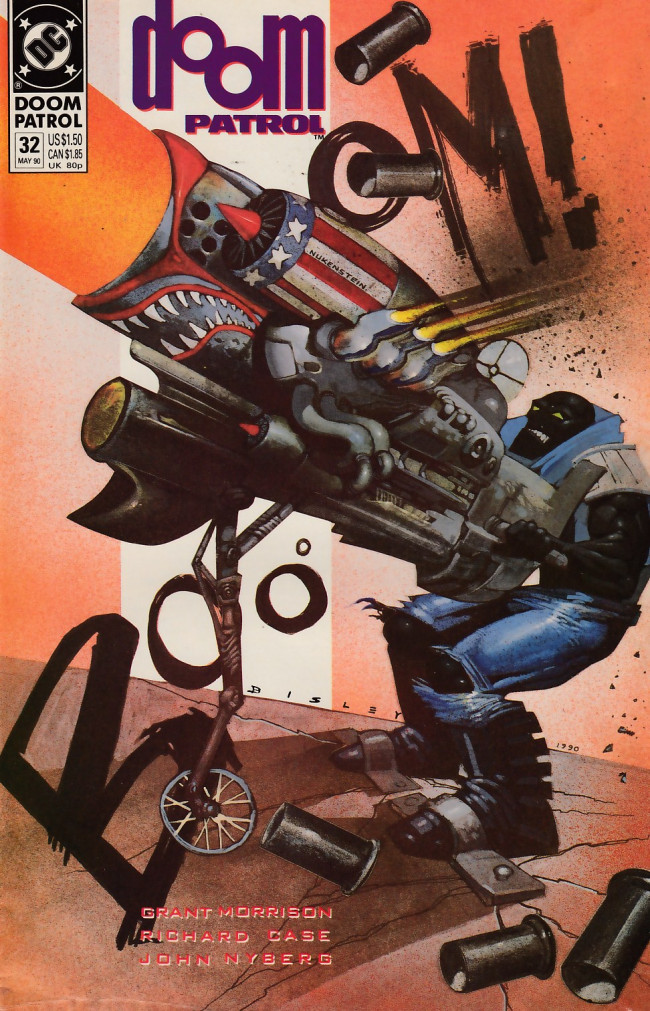

Raw and energetic style: By combining painting, aggressive inking, and mixed-media techniques, Bisley created striking images that radiate an almost visceral intensity. His textures and use of materials gave his illustrations a tangible, organic feel.
A mix of realism and caricature: His characters feel alive and expressive, yet always with a grotesque twist. Their contorted faces and exaggerated poses distort reality in a way that perfectly aligns with Doom Patrol’s bizarre universe.
Diverse influences: From classical painting to punk rock posters and heavy metal imagery, Bisley drew from multiple inspirations to craft unique compositions. Each cover is a visual shock, a rebellious scream that defies conventional comic book art.
The Impact of Bisley’s Covers on the Series
Bisley’s covers weren’t just decorative—they actively shaped the identity of Doom Patrol under Morrison’s reign.
They reinforced the series’ “weird” and unique image: Doom Patrol was no longer just an unusual superhero comic. Bisley’s artwork made it clear from the outset—this was a deep dive into a twisted, complex, and adult world.
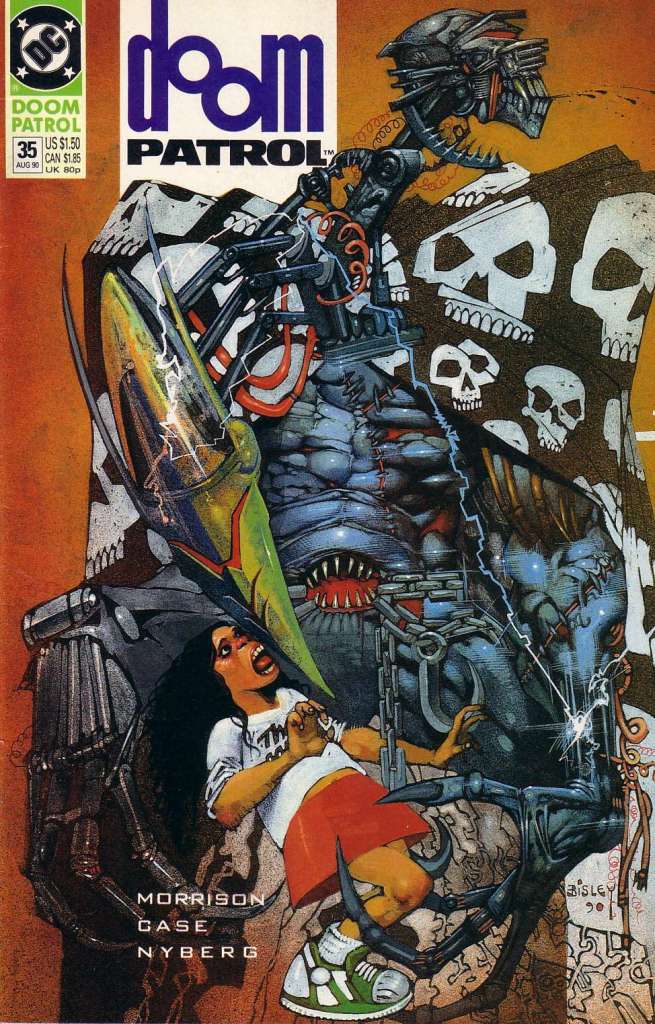
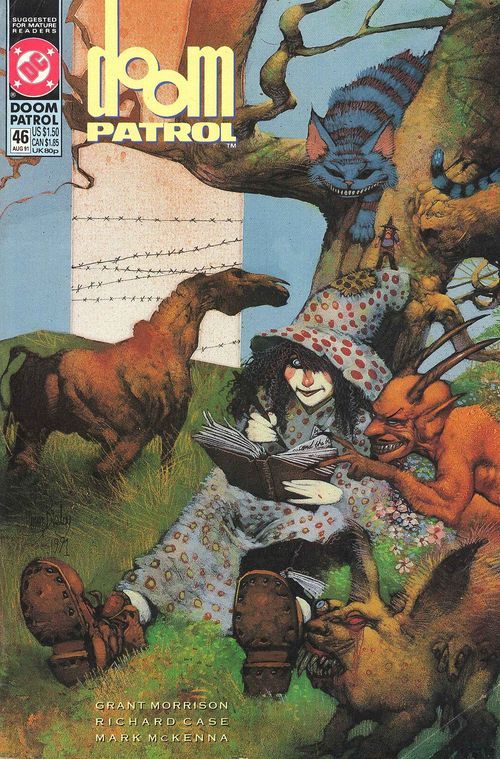
They helped mark the transition to Vertigo: When Doom Patrol officially moved under the Vertigo imprint, its aesthetic shift was undeniable. Bisley’s style—blending punk, surrealism, and raw energy—was the perfect embodiment of what the label stood for.
A lasting visual legacy: His influence can still be seen today. Even modern Doom Patrol iterations seem to echo the raw, unhinged energy and visual madness that he introduced between 1989 and 1992 (#26 to #58), before a brief return in 2021.
Why Hasn’t There Been an Artbook Dedicated to Bisley’s Doom Patrol Covers?
Seriously, how is this not a thing yet? Bisley’s Doom Patrol covers are among the most striking in comic book history. An artbook compiling all of them—alongside sketches, artist commentary, and in-depth analysis—would be an absolute must-have for fans.
In an interview about plagiarism, Bisley emphasized the importance of bringing something new to art—not just copying, but injecting style, personality, and madness. And that’s exactly what he did with Doom Patrol. His approach to mixed media—collages, textures, raw materials—combined with his unique ability to depict anatomy through a near-metaphysical lens makes him a Michelangelo on acid.So, when will DC Comics give us the tribute book this legendary work deserves? Take my money already.
 Simon Bisley Fanboys