

Sláine Mac Roth, the Celtic hero beloved by genre fans, is a character as captivating as he is complex. Created by Pat Mills and Angie Kincaid, he made his first appearance in the British magazine 2000 AD in 1983, with Kincaid handling the illustrations.
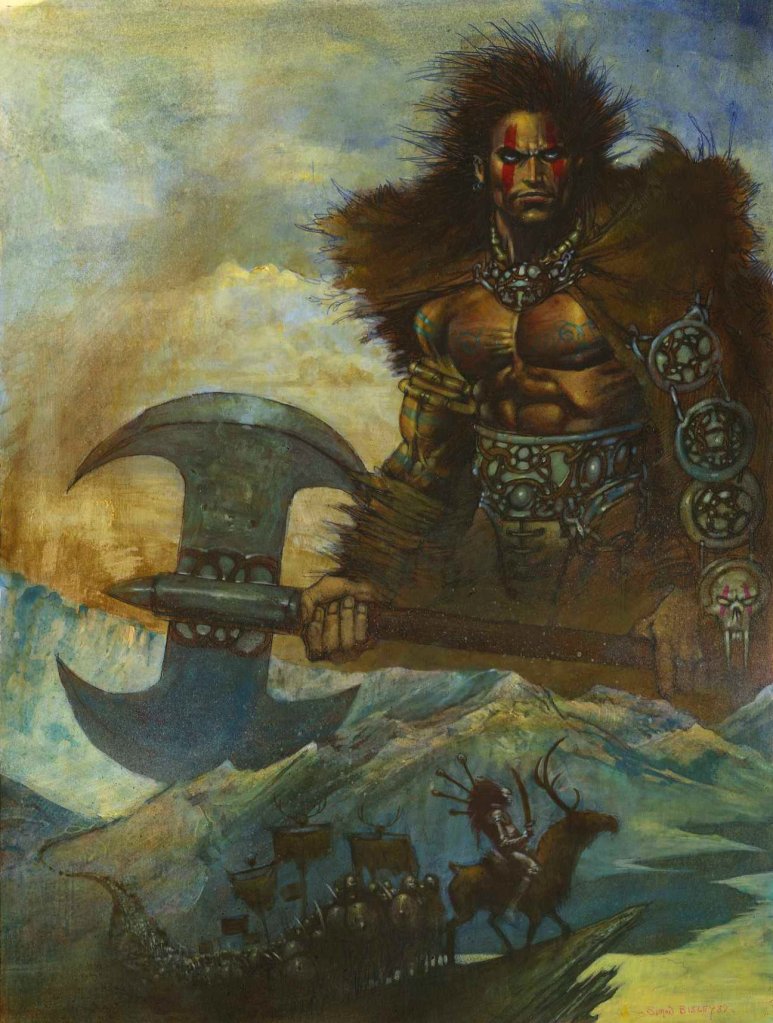
It was in the 1990s, thanks to Simon Bisley‘s mastery, that Sláine truly became an internationally iconic figure.
As a passionate fan of Simon Bisley’s work, I have had the opportunity to explore the development of this character. My research, enriched by direct conversations with Bisley, has allowed me to better understand the impact of his work on Sláine’s evolution.
I should nonetheless clarify that my interest mainly focuses on the ‘Bisley period,’ as it was his art that led me to discover this fascinating character in the first place.
The Origins of Sláine before Bisley
Sláine is a character from British comics, heavily inspired by Celtic mythology, particularly Irish legends.
The black-and-white style of the early artists, such as Angie Kincaid and Mike McMahon, gave Sláine a raw look, perfectly in tune with the dark and mythological world of the character. The simple but evocative linework allowed readers to fill in the visual details with their imagination. This created a striking contrast with the often violent and epic tones of the story.
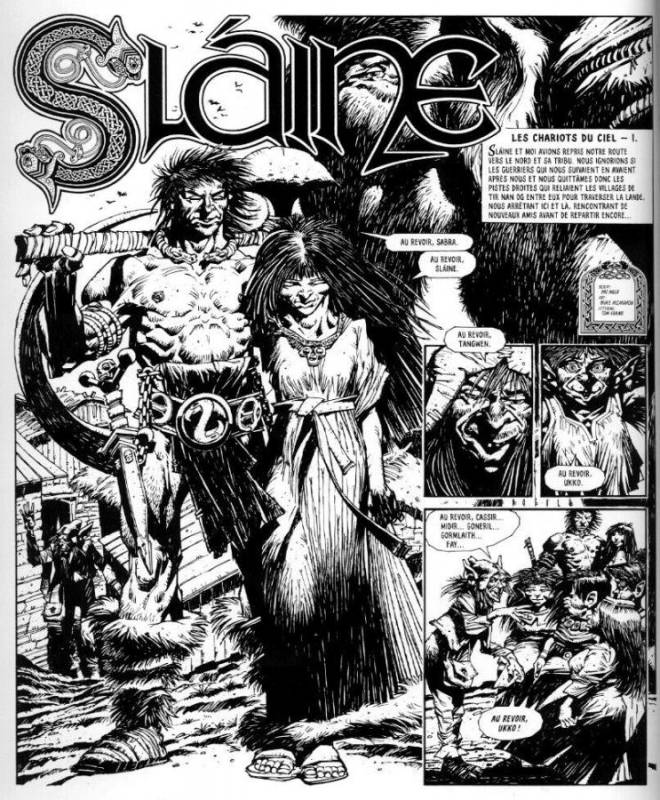
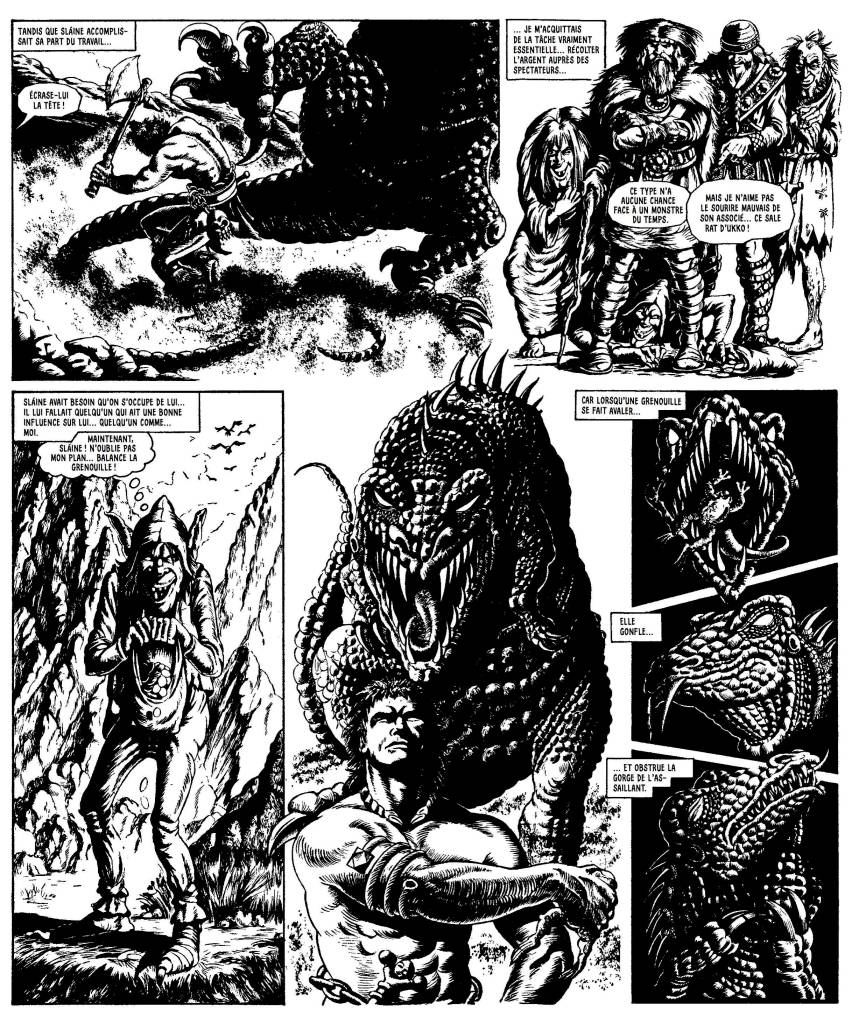
The choice of black and white was also a constraint tied to the publishing schedule of the comics. It’s hard to keep up the pace with colored illustrations, let alone complete paintings… That was unthinkable.
The arrival of Simon Bisley in the 1990s marked a radical shift.
Arrival of Simon Bisley
Simon Bisley was discovered when a friend took examples of his work to the magazine 2000 AD. Pat Mills, who saw his work, quickly offered Bisley a job, launching his career with the British publication.
After proving his talent on ABC Warriors, Bisley was invited to join the team on Sláine, another iconic project published by 2000 AD. This marked a turning point in his career, as he fully immersed himself in the visual universe of the character. Drawing inspiration from Celtic myths and a barbaric aesthetic, he infused his unique touch into the art.
Using primarily painting techniques, Bisley introduced a raw and expressive visual style never before seen in comics. Influenced by the art of Frank Frazetta, his work brought a powerful energy to every illustration. His style combined epic grandeur with a grotesque edge that fit perfectly within the Celtic universe of Sláine.
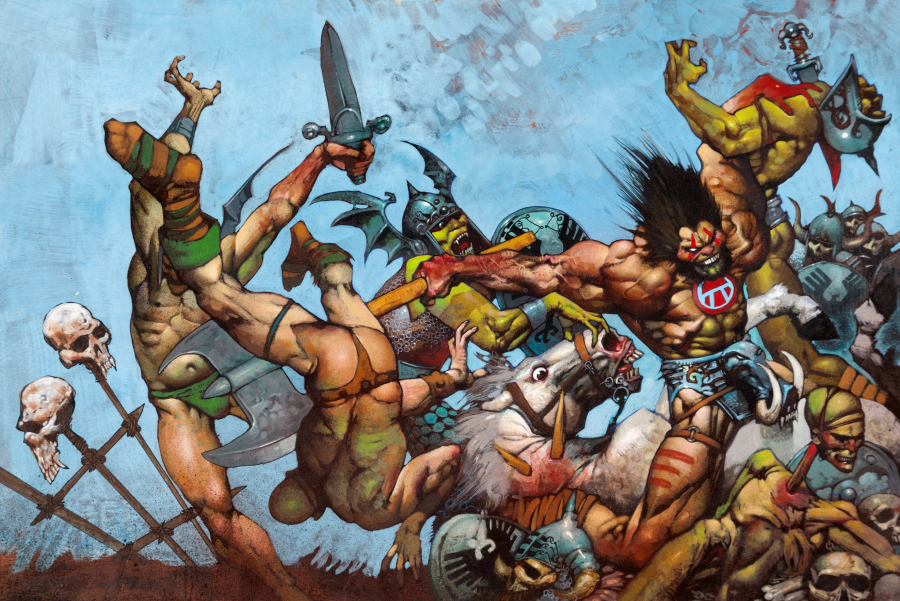
Pat Mills shared on Twitter that, despite doubts about the feasibility of Bisley producing fully painted pages quickly, the artist surpassed expectations. Mills even referred to Bisley’s work as a “game changer,” reshaping how they envisioned the visual approach to the series.
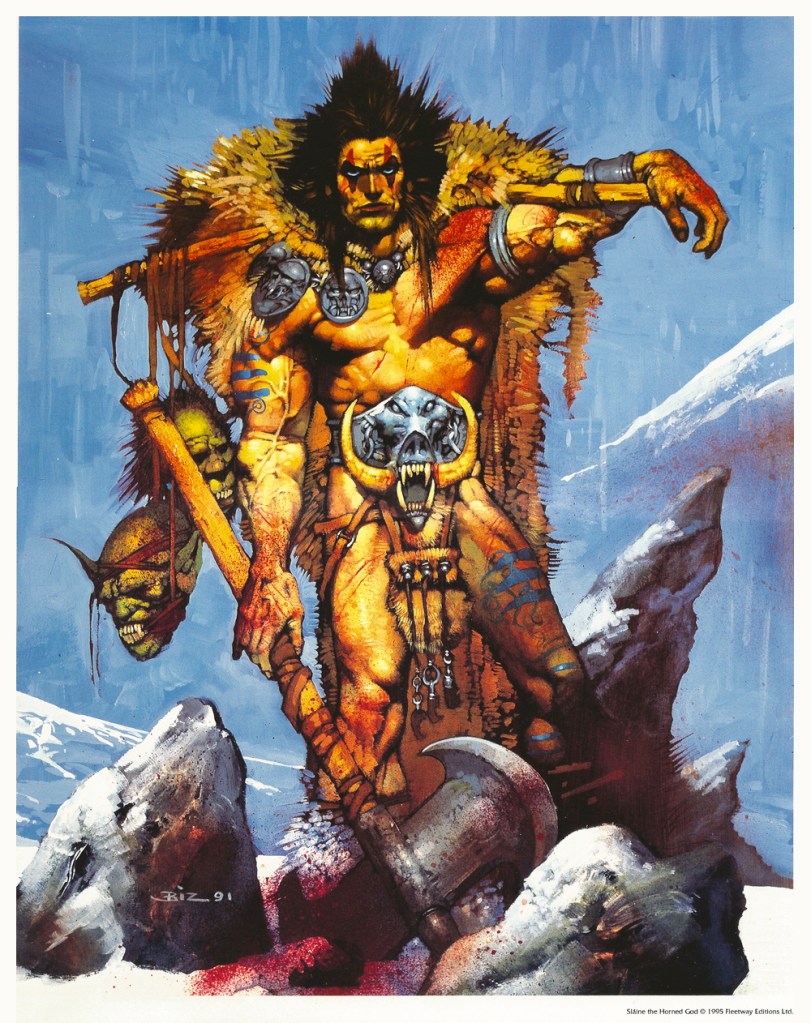
While earlier artists like Massimo Belardinelli and Mike McMahon laid the groundwork for Sláine‘s look, it was Bisley who truly transformed the character in the 1990s. He gave Sláine a more muscular, savage appearance, often depicted in epic and bloody battle scenes. Along with this more detailed and imposing style, Bisley’s vibrant use of color enhanced the barbaric, fantastical atmosphere of the story.
Throughout his work on Sláine, Bisley experimented with various styles and painting techniques. He incorporated textures, light and shadow play, and striking details into each illustration, creating a visually arresting style that was both raw and dynamic. In a conversation about Sláine, Bisley told me:
“I would use pure colors from the tube, mix paint for flesh tones. Bright is might! When you paint, be fearless! It’s about making contrasts so the colors fight each other, making the painting live.”
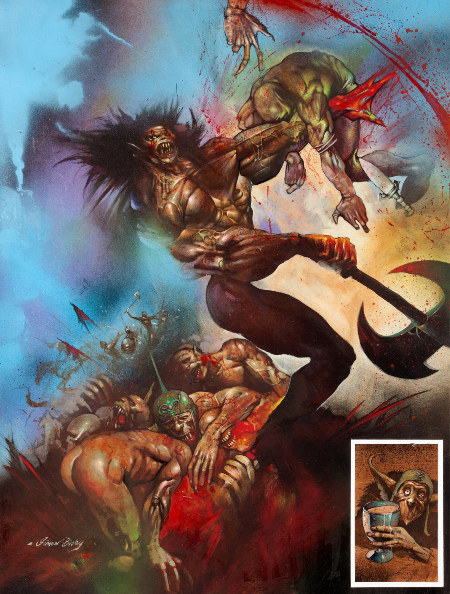
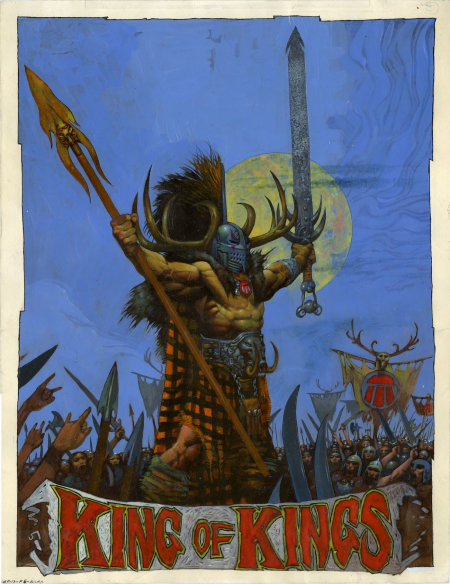
Looking back, Bisley has said this period was formative in his artistic journey. “You can see my style evolving almost page by page,” he reflected, highlighting his constant push to expand his skills and push the boundaries of his art. This relentless pursuit of improvement helped make him one of the most influential illustrators of his generation.
A 1990 BBC documentary on the “Green Man” offers a glimpse of Mills and Bisley discussing Celtic legends, with a particularly impressive demonstration of Bisley’s rapid painting technique.
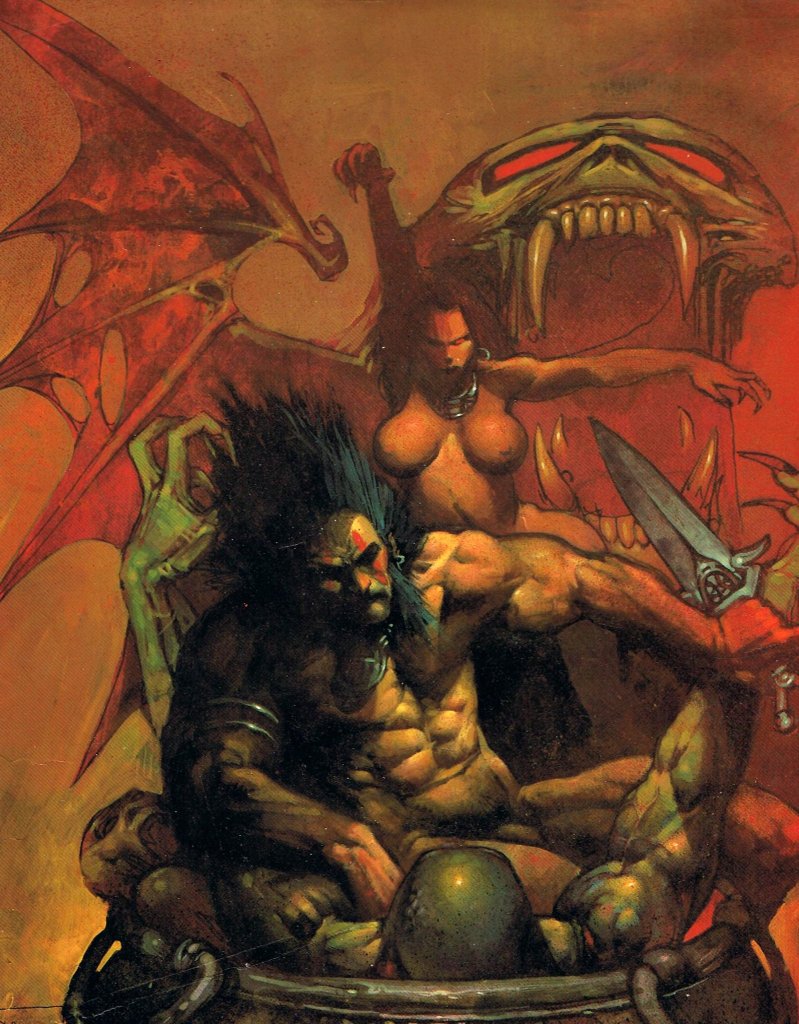
Despite his artistic success, Bisley has revealed that he sometimes felt limited by Pat Mills’ scripts, as their creative visions didn’t always align. Bisley, a fan of Robert E. Howard, envisioned Sláine more in the vein of Conan: a magical, sorcery-infused epic hero, whereas Mills favored a more historical and grounded approach. Over time, however, Bisley came to appreciate Mills’ perspective and acknowledged that their collaboration was ultimately a success, both in terms of sales and audience impact. He cites Pat Mills as one of the people he enjoyed working with the most.One notable difference between their visions lies in the coloring. Early Sláine comics illustrated by Bisley were desaturated for reasons that remain unclear. The original art I share on social media often sparks reactions, with fans noting the stark contrast in color. However, for Sláine’s 30th anniversary in 2024, 2000 AD plans to publish a special edition restoring the vibrant colors of Bisley’s original paintings, delivering a closer representation of his true artistic vision.
Simon Bisley’s legacy on the series
After his departure from the series, Simon Bisley had left an indelible mark on Sláine. Having set the bar very high in terms of artistic quality, it quickly became evident to 2000 AD that it would be a significant challenge to maintain this level of excellence. To achieve this, the publisher enlisted other talented artists, such as Glenn Fabry, Clint Langley, and Simon Davis, each bringing their own vision while drawing inspiration from Bisley’s groundbreaking work. However, despite these fruitful collaborations, Bisley’s impact on the series remains unmatched.
History will remember Bisley’s major contribution to the Sláine universe, and his iconic illustrations will continue to influence an entire generation of readers and artists. His bold approach, blending dynamism and visual power, not only redefined the comic’s aesthetic but also left a lasting mark on popular culture. It is no coincidence, then, that the volumes he illustrated have been reprinted numerous times, allowing a new audience to discover or rediscover his work. Simon Bisley’s artistic legacy in Sláine remains, to this day, an essential reference in the world of comic books.
 Simon Bisley Fanboys